
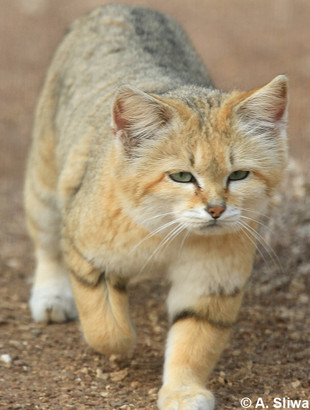
Sand cat facts
- Paws are covered with dense fur which prevents burns on the feet when cat walks on the hot sand.
2. Thanks to the furry paws, sand cats don’t leave footprints in the sand.
3. Sand cat is carnivore (meat-eaters). Its diet consists of small rodents, insects, birds, lizards and snakes.
4. Sand cats hide leftover food in the sand.
5. Sand cats can survive without water long period of time (couple of months). They absorb required moisture from the food they eat.
6. Main predators of sand cats are wild dogs, snakes, birds of prey and humans.
7. Unlike other species of cats, sand cat is poor climber and jumper but proficient digger. They dig burrows in the sand where they hides from the harsh desert sun.
Info
| Weight: | 1,35-3,4 kg |
| Body length: | 39-52 cm |
| Tail length: | 22-31 cm |
| Longevity: | up to 17 years in captivity |
| Litter size: | 2-8 cubs, average 3 |
Scientific name: Felis margarita




 Animals and Earth